For the past few years, the public's interaction with Large Language Models (LLMs) has been strictly conversational. You type a prompt into a text box, and the system generates a recipe, writes a block of code, or drafts a polite email. It was a fascinating technological leap, but it still required the human user to act as the middleman, taking the generated text and manually pasting it where it needed to go.
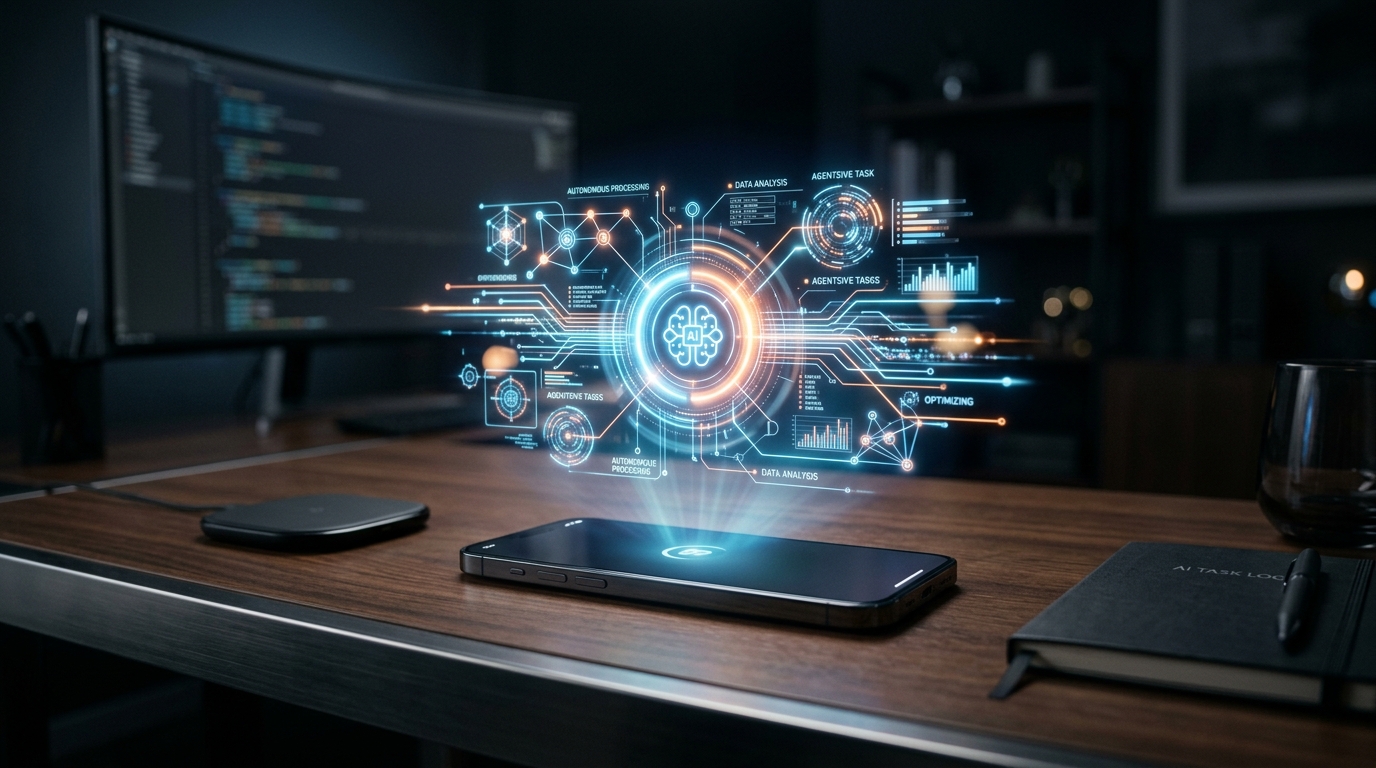
In 2026, the tech industry has definitively moved past the "chatbot" phase. The latest and most significant trend is the mass deployment of "AI Agents." These are systems designed not just to answer your questions, but to actively operate your software on your behalf.
The Difference Between Answering and Executing
To understand the shift, consider the task of booking a flight.
If you ask a standard 2024-era chatbot to help you, it will scrape the internet and provide a neatly formatted list of airlines, departure times, and estimated prices. You then have to close the chat, open the airline's website, input your credit card information, and manually purchase the ticket.
An AI Agent eliminates the manual labor entirely. Instead of asking for a list of flights, you give the Agent a directive: "Book me the cheapest window seat to Chicago leaving Friday night, and use my airline miles." The Agent then autonomously navigates the web browser, fills out the booking forms, securely applies your payment details, and drops the final boarding pass directly into your calendar.
How Agents Are Infiltrating Consumer Tech
You do not need to be a software developer to use this technology; it is already being baked into the consumer devices you own.
Major smartphone operating systems are now heavily integrating agentic behavior into their core architecture. Instead of tapping through three different apps to split a dinner bill, users can simply tell their phone to "calculate my half of the receipt and send the money to Sarah." The device's internal LLM understands the context, securely opens the banking app, inputs the correct amount, and executes the transfer without you ever touching the screen.
The End of the "User Interface"
The rise of AI Agents is fundamentally threatening the traditional graphical user interface (GUI). For decades, we have been forced to learn how software works—memorizing where specific buttons are hidden in drop-down menus or navigating complex file structures.
Agents reverse this dynamic. You no longer have to learn how to use the software; the software learns how to understand your plain English commands. As these models become faster and more reliable, the need to manually click, drag, and drop files will begin to feel as outdated as using a rotary telephone. The future of computing is entirely delegatory.